

Call us now
08071930342

 Send Inquiry
DISCRETE COMPONENT TRAINER
Price 10600 INR/ Piece
MOQ : 01 Piece
DISCRETE COMPONENT TRAINER Specification
- Equipment Type
- Laboratory Instrument
- Equipment Materials
- Stainless Steel
- Power
- 150 - 220 W Watt (w)
- Voltage
- 220 volt A.C Volt (v)
- Material
- SS
- Application
- Laboratory
DISCRETE COMPONENT TRAINER Trade Information
- Minimum Order Quantity
- 01 Piece
- Main Domestic Market
- All India
About DISCRETE COMPONENT TRAINER
"CROWN made DISCRETE COMPONENT TRAINER to determine the construction & working of various Electronic Components.
SPECIFICATION
1) In built DC Regulated Power Supply +12V/250mA
& +5V/250mA.
2) AC Power Supply 9-0-9V/500mA.
3) 4 no. Logic Input with toggle switch.
4) 4 no. Digital Output indicator.
5) 12 no. Different types of Resistances (WireWound ,
Carbon Film & Metal Film Resistor).
6) 12 no. Different types of Capacitors ( Ceremic,
Polyster & Electrolytic capacitor)
7) 9 no. Different types of diodes ( Si diode, Ge diode,
Zener diode, Photo diode & Light Emitting diode )
8) One no. Diac.
9) 2 no. PNP & NPN Transistors.
10) One no. FET.
11) One no. UJT.
12) One no. TRIAC.
13) One no. SCR.
14) One no. MOSFET.
15) One no. Thermister
16) One no. Solar Cell.
17) One no. Speaker.
18) Two no. Voltage Regulators ( 7805&7905)
19) Two no. Potentiometers (1 K! & 10K!)
20) One no. Relay.
21) One 14 Pin IC Base.
Technical Details 
Durable Stainless Steel Construction
Crafted from premium stainless steel, the Discrete Component Trainer is built to withstand rigorous academic and research lab environments. The corrosion-resistant frame enhances its longevity, ensuring stable operation for years of continual use.
Optimized for Laboratory Experimentation
Specially designed for laboratory applications, this trainer enables comprehensive study of electronic components and circuits. It facilitates interactive learning and practical testing, making it indispensable in educational and R&D facilities.
FAQs of DISCRETE COMPONENT TRAINER:
Q: How is the Discrete Component Trainer used in a laboratory setting?
A: The trainer is used for analyzing and experimenting with discrete electronic components and circuits during laboratory sessions. Students and researchers connect components and simulate electrical behaviors, enhancing their practical understanding of electronics.Q: What is the main benefit of using this trainer in educational institutions?
A: It provides hands-on experience in handling and studying electronic components, fostering a deeper understanding of circuit theory and practical skills among students. This improves both theoretical knowledge and technical proficiency.Q: When should this equipment be integrated into laboratory courses?
A: It should be incorporated when students begin learning about electronic circuits, typically in introductory or intermediate electronics and electrical engineering programs, as well as during specialized training modules.Q: Where is the Discrete Component Trainer primarily manufactured and supplied?
A: This equipment is primarily manufactured, exported, and supplied in India by reputable exporters, manufacturers, suppliers, and traders dedicated to laboratory instrumentation.Q: What is the process for operating the trainer?
A: To operate, connect the equipment to a 220 volt AC power supply, select the desired components, and arrange them on the trainer module. Power on the device and utilize the interface to perform circuit testing and analysis.Q: Can the trainer accommodate various laboratory applications?
A: Yes, its flexible design supports a wide range of laboratory experiments focused on discrete electronic components, making it suitable for electronics labs in educational and research institutions.Q: What voltage and power specifications should be observed with this equipment?
A: Ensure the trainer is powered with 220 volt AC and operates within the recommended power range of 150 to 220 watts to maintain optimal performance and safety during experiments.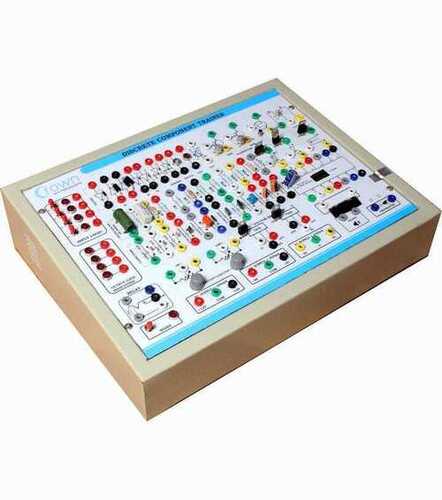
Tell us about your requirement

Price:
Quantity
Select Unit
- 50
- 100
- 200
- 250
- 500
- 1000+
Additional detail
Mobile number
Email

More Products in ELECTRONIC TRAINING BOARD FOR VARIOUS LABS Category
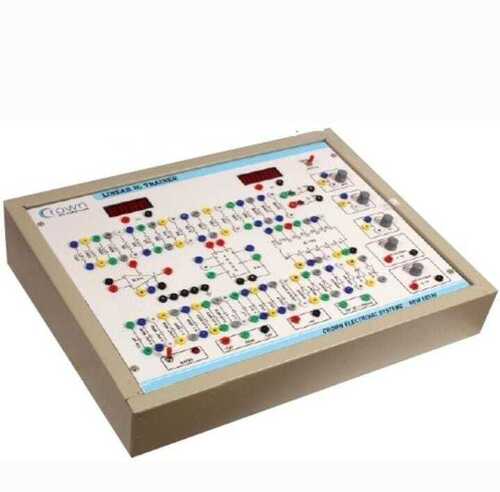
LINEAR IC TRAINER
Price 13300 INR / Piece
Minimum Order Quantity : 01 Piece
Equipment Type : Laboratory Instrument
Material : SS
Equipment Materials : Stainless Steel
Power : 150 220 W Watt (w)
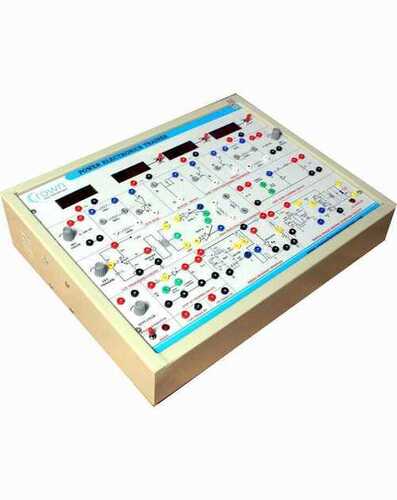
POWER ELECTRONICS TRAINER
Price 22000 INR / Piece
Minimum Order Quantity : 1 Piece
Equipment Type : Laboratory Instrument
Material : SS
Equipment Materials : Stainless Steel
Power : 150 220 W Volt (v)
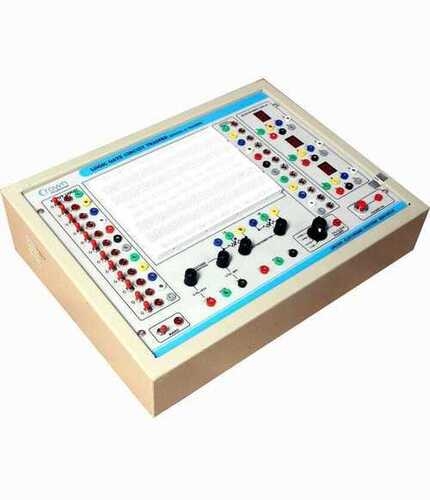
DIGITAL IC TRAINER
Price 12600 INR / Piece
Minimum Order Quantity : 1 Piece
Equipment Type : Laboratory Instrument
Material : SS
Equipment Materials : Stainless Steel
Power : 150 220 W Watt (w)

GST : 07ACOPN7091E1Z9

|


Plot No. A-25, Ground Floor, Keshopur Industrial Area, Vikaspuri, New Delhi - 110018, India
Phone :08071930342
Mr Aditya Nagpal
(Proprietor)
Mobile :08071930342
Mr. Kushagr Nagpal
Mobile :08071930342
 Send Inquiry
- DC REGULATED POWER SUPPLY
- DUAL OUTPUT DC REGULATED POWER SUPPLY
- HIGH VOLTGE DC REGULATED POWER SUPPLY
- HIGH VOLTAGE BREAKDOWN TESTER
- DIGITAL MICRO OHM METER
- DIGITAL MILLI OHM METER
- AUTO TRANSFORMER (VARIAC)
- SIGNAL GENERATOR
- Digital Measuring Instrument
- ELECTRONIC TRAINING BOARD FOR VARIOUS LABS
- DECADE BOX L.C.R
- Variable DC Power Supply 0-300V / 5A
 Send Inquiry
 Send SMS
CROWN ELECTRONICS SYSTEMS
All Rights Reserved.(Terms of Use)
Developed and Managed by Infocom Network Private Limited.
Developed and Managed by Infocom Network Private Limited.

